AI Is Changing the Workplace. Here’s How One Worker-Owned Solar Cooperative Is Thinking About It.
Artificial intelligence has quickly become one of the biggest conversations across nearly every industry.
New tools promise to automate routine tasks, organize information, analyze data, and increase efficiency in ways that were unimaginable just a few years ago. The solar industry is no exception.
As solar companies navigate increasingly complex projects, larger datasets, evolving regulations, and growing customer expectations, AI is beginning to find its place alongside the people who design, install, monitor, and maintain clean energy systems.
The question isn’t whether AI will become part of the workplace. The question is how to use it responsibly.
That was the focus of a recent presentation by PV Squared Solar Worker-Owner Rachel Levey at the Amicus O&M Leadership Retreat in North Little Rock, Arkansas, where operations and maintenance leaders from solar companies across North America gathered to share best practices and strengthen collaboration.
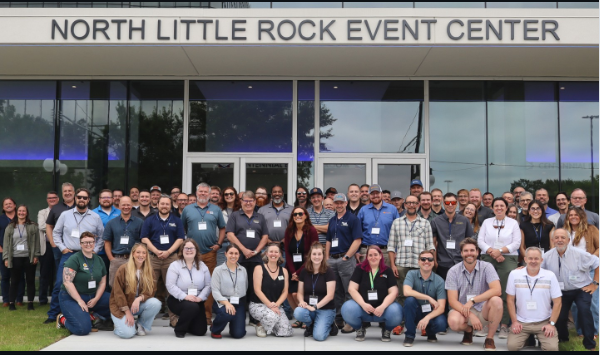
Rachel was invited to lead a session exploring how emerging AI tools can improve efficiency while protecting data security, maintaining human expertise, and preserving the trust that clients place in their solar partners.
For Rachel, the invitation represented more than an opportunity to discuss technology.
It was an opportunity to share how a worker-owned cooperative approaches innovation.
“It was an incredible honor to represent PV Squared and the cooperative model on a national stage,” Rachel said. “AI has tremendous potential to help us work more efficiently, but only when it’s used thoughtfully. Our clients still deserve human expertise, careful judgment, and relationships built on trust. Technology should strengthen those things, not replace them.”
AI Is an Amplifier, Not a Replacement
One idea remained at the center of Rachel’s presentation:
AI should amplify human expertise, not replace it.
Throughout the session, she demonstrated practical ways AI can support day-to-day operations, including helping analyze large performance datasets, assisting with permitting research, improving project handoffs between departments, organizing internal feedback, and accelerating administrative tasks.
None of those examples replaced the experience of a solar professional.
Instead, they helped create more time for the work that matters most: solving problems, collaborating with coworkers, and serving clients.
At PV Squared, we believe clean energy has always been a people business.
Every solar project begins with conversations. It depends on thoughtful design, skilled craftsmanship, careful communication, and relationships that often continue for decades after a system is installed.
Those responsibilities cannot be delegated to software.
Innovation With Intention
Rachel also encouraged attendees to think beyond efficiency alone.
Her presentation explored the environmental impacts of expanding AI infrastructure, the importance of protecting proprietary and client data, recognizing potential bias in AI-generated information, and establishing clear organizational policies for responsible use.
Like any powerful technology, AI deserves thoughtful governance.
That perspective reflects how PV Squared has approached innovation since our founding in 2002.
Whether we’re evaluating new equipment, battery technologies, software platforms, or workplace tools, we ask the same questions:
Will this improve the quality of our work?
Will it strengthen the experience of our clients?
Will it help us build a more resilient cooperative?
Innovation isn’t simply about adopting the newest technology.
It’s about adopting the right technology for the right reasons.
A Cooperative Perspective
Worker ownership naturally encourages long-term thinking.
The people making decisions about new tools are the same people who will use them every day, collaborate with one another, protect client information, and remain accountable for the results.
That creates an environment where technology isn’t adopted because it’s fashionable.
It’s adopted because it genuinely helps people do their work better.
“Rachel’s presentation reflects something we’ve always believed at PV Squared,” said Kate Carter, Team Manager. “Innovation isn’t about chasing the newest technology. It’s about thoughtfully evaluating new tools and asking whether they help us better serve our clients, our coworkers, and our mission. We’re incredibly proud to see Rachel representing our cooperative and helping lead this conversation across the industry.”
Building the Future Responsibly
As artificial intelligence continues to evolve, so will the conversations surrounding it.
For the solar industry, AI will almost certainly become another valuable tool, helping companies process information more efficiently, identify trends more quickly, and reduce repetitive administrative work.
But tools don’t define organizations.
People do.
At PV Squared, we believe the future of clean energy depends not only on embracing innovation, but on ensuring that innovation remains grounded in human expertise, ethical decision-making, and meaningful relationships.
As Rachel reminded attendees throughout her presentation:
“Good solar has always been about people first. The conversations we have with clients, the experience our teams bring to every project, and the responsibility we have to our communities can’t be automated. AI can help us do our work better, but it should never replace the human relationships that make our work meaningful.”
Like all tools, AI should be used with intention and care.
That’s the future we’re working toward.